The Nasio Story
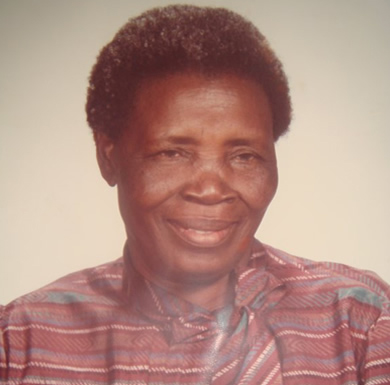
In 2000, in a small village in western Kenya, the late Irene Mudenyo found an abandoned baby in a sugarcane plantation on her farm. He had been left in a blanket and must have been there for at least three days. The baby, who was about three months old, was was severely dehydrated and under-nourished and needed urgent hospital attention. Irene’s attempts to find his parents or relatives proved futile. She felt he would be better off in a family environment and she decided to care for the baby, who she named Moses, despite being in her late 70’s.
The plight of Moses exposed the problem of poverty and consequences of the high incidence of HIV in the area of Mumias in western Kenya.
The plight of Moses exposed the problem of poverty and consequences of the high incidence of HIV in the area of Mumias in western Kenya. One of Irene’s daughters, Lorna, owned a road-side kiosk which was not being used, Irene’s daughters decided to start up a feeding programme for orphaned and vulnerable children in the area. On the first day more than 60 children turned up for the fifteen places then available, highlighting the extent of the need.
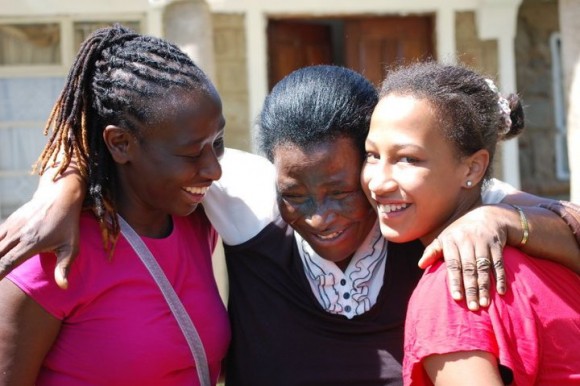
Irene’s youngest daughter Nancy, who was living in the UK visiting her mother in 2000, couldn’t help but be touched by the plight of Moses and other children like him. She decided to fundraise in the UK and set up a charity in 2001 called The Nasio Trust to give these children a chance in life.
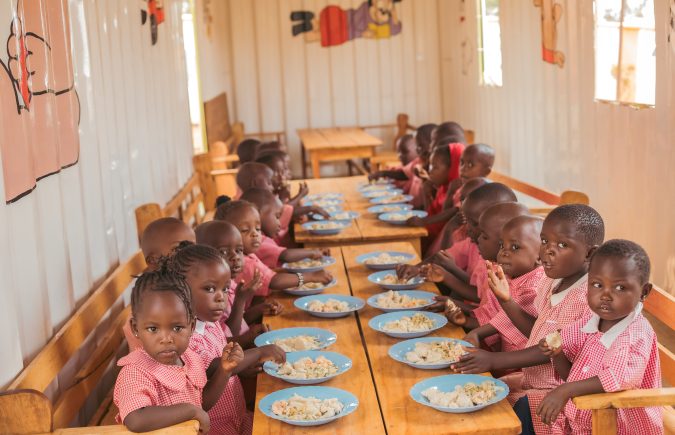
After extensive fund-raising, a new bigger Noah’s Ark centre was completed in 2005 for the care of the children, and just 4 years later St Irene’s centre in nearby Musanda where Moses had been found opened its door. The centres work with the local communities to provide education, meals, medical care and psycho-social support to children and their guardians in our care.
Two decades later The Nasio Trust, led by Irene’s youngest daughter, the CEO Nancy Mudenyo Hunt, supports over 400 children, runs two purpose-built day care centres, a medical centre and provides a range of education and development programmes. Nasio’s community-based approach is aimed at providing an holistic solution to ending the cycle of poverty by providing education, improving health, and developing commerce through sustainable income-generating projects.
Irene died in 2007 of cancer of the oesophagus, but her legacy lives on. The charity, which employs over 80 local Kenyans, has now extended its support to the communities by:
- Providing healthcare through its purpose-built GMK Medical Centre treating well over 10,000 patients a year and providing maternity services for 500 mothers and babies a year
- Immunising babies against malaria and other life-threatening diseases
- Running a Peer Education programme reaching over 4,000 young people to reduce teenage pregnancies, avoidance of HIV, information on general Sexual reproductive Health and safe places to meet.
- Programmes to keep girls in education where poverty and cultural norms in the community do not value educating a girl child.
- An Exceptional Student Programme to identify students, especially girls, who despite their disadvantaged backgrounds achieve high academic standards and support them through secondary and university education equipping them to be future leaders in Kenya.
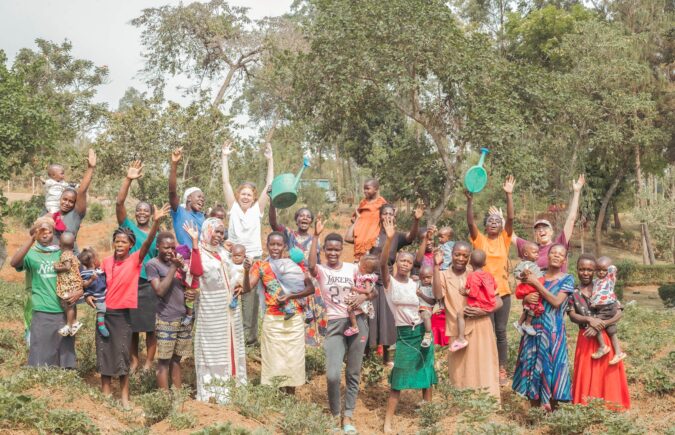
- A Farming programme for over 500 subsistence farmers so that they can increase crop yields to feed their families and have surplus for sale to generate income.
- Adult literacy and numeracy classes for women who missed out on education so that they have the skills to start their own small businesses.
- Out of school clubs teaching young people skills in agriculture, bike repairs and tailoring.
- Farming on our own land to provide food to the children supported by us at our ECDs and surplus to sell at market.
- A tree nursery to provide saplings to the community to increase the number of indigenous trees.
- Spirulina production to provide this food supplement to malnourished children, provide employment and generate income.
- Beekeeping for providing honey for sale and to benefit the environment.
- Fish ponds to produce Talapia fish to feed children and to sell at market.
Nancy comments: “The amazing thing is to see something so positive that started with just one child, found in a sugar cane field”